
Custom E-Commerce Website Development Company Bangalore
Build an Online Store Around the Way Your Business Actually Sells
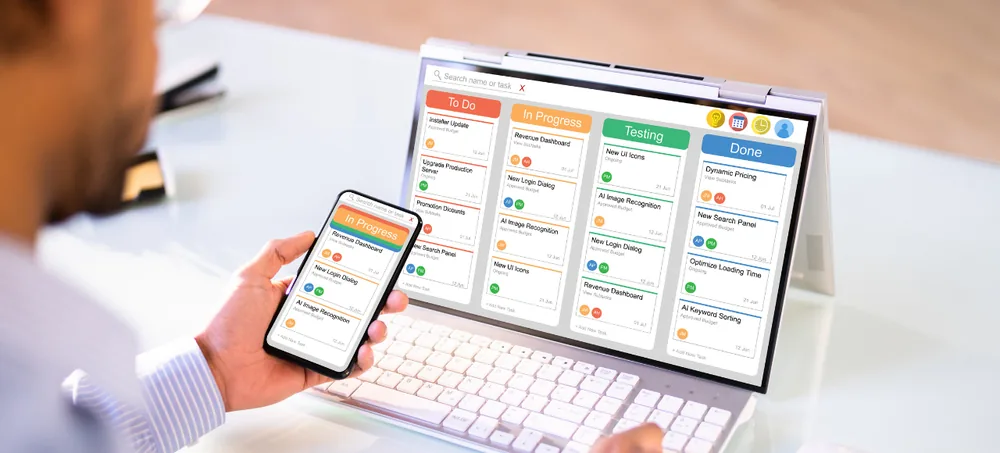
An e-commerce website should do more than display products. It should help customers discover the right products, understand what they are buying, complete orders efficiently and receive a consistent buying experience across devices.
If you are looking for a custom e-commerce website development company Bangalore businesses can brief, the first step is to understand what your business needs the website to accomplish. Product structures can vary, pricing may depend on customer type, dealers may need separate ordering workflows and growing businesses may need the store to work with ERP, CRM, accounting or logistics systems.
EchoPx provides custom e-commerce website development services in Bangalore for businesses that need their online store to reflect their products, customers, sales process and operational requirements. The website can be planned around the actual business workflow rather than forcing the business to adapt to a fixed storefront structure.
From product catalogue management and search to shopping carts, checkout, customer accounts, order management, integrations and reporting, each part of the website can be designed according to the requirements of the business.
Get a Free Quote
Experience Behind Every EchoPx Project
These figures describe EchoPx overall experience and project history and are not presented as a guarantee of a particular e-commerce project outcome.
Why Businesses Need Custom E-Commerce Website Development
Many businesses begin online selling with a simple product catalogue and basic checkout. As the business grows, operational requirements often become more detailed.
A growing product range can make navigation more important. More customers can increase the need for organized order management. Different customer groups can create different pricing requirements. Wholesale buyers may need bulk ordering, while retail customers expect a straightforward product-to-checkout journey. The website therefore becomes part of the wider business process.
A custom e-commerce development approach can address these requirements by connecting the customer experience with the operational processes behind it.
Common E-Commerce Problems Businesses Face
A Store That Does Not Match the Business Model
A retailer, manufacturer, distributor and direct-to-consumer brand do not necessarily sell in the same way.
A B2B business may require customer-specific pricing, minimum order quantities, bulk ordering, dealer accounts, quotation requests or approval workflows. Custom e-commerce development allows these requirements to be considered during planning.
Difficult Product Discovery
Large catalogues may require categories, filters, search, sorting, product attributes, variants and related products. The structure should make sense to the customer while giving administrators a manageable way to maintain product information.
Manual Order Processing
When online orders need to be manually copied into internal systems, employees may spend unnecessary time entering and checking information. An integrated workflow can reduce repetitive steps according to the agreed process.
Disconnected Inventory Information
Inventory information can become difficult to manage when the e-commerce store and internal business systems are maintained separately. Where appropriate, ecommerce inventory management can be connected with existing systems.
Complicated Checkout
Unclear product information, unnecessary steps, limited payment options or confusing order confirmation can make the purchase process harder to complete. Checkout should be designed around the customer, payment process, shipping requirements and business rules.
Limited Business Visibility
A storefront should provide useful operational information. Depending on requirements, dashboards and reports can help teams review products, orders, customers and sales activity.
Difficulty Adding New Functionality
As requirements change, businesses may need new integrations, customer types, workflows or modules. A modular approach allows functionality to be introduced in phases instead of all at once.
Custom E-Commerce Website Development in Bangalore
EchoPx approaches custom e-commerce development by first understanding the business and then mapping the website functionality to its requirements.
The development scope can include the customer-facing storefront, administration functionality, product catalogue, shopping cart, checkout, customer accounts, order management, integrations and custom workflows. A custom e-commerce website can support both B2C and B2B business models, depending on the requirements.
B2C Businesses
The emphasis may be on product discovery, visual presentation, simple navigation, promotional campaigns and checkout.
B2B Businesses
Requirements may include customer-specific pricing, bulk ordering, dealer accounts, quotation processes, approval flows and integration with internal systems.
Manufacturers and Distributors
The website may become an additional sales channel that connects product information and ordering processes with existing operations.
Online Marketplaces
The architecture can be considered around seller management, product administration, commissions, customer ordering and marketplace workflows.
E-Commerce Website Features
Each capability can be scoped according to the requirements of the business.
Product Catalogue Management
A structured product catalogue provides the foundation for an online store. Products can be organized using categories, attributes, variants and other relevant information so administrators can add, update and organize products without unnecessary complexity.
Product Search and Filters
Search and filtering help customers navigate larger catalogues. Filters can be based on attributes such as category, brand, size, material, price range, colour, availability or other specifications, defined according to the product catalogue.
Product Pages
Product pages should communicate what customers need before purchase: images, descriptions, specifications, variants, pricing, availability, related products and ordering information. A well-structured product page supports both customer decision-making and search visibility.
Shopping Cart
The shopping cart collects selected products before checkout. Custom cart functionality can account for quantities, variants, pricing rules and applicable offers. For B2B stores, the cart may also support bulk quantities or customer-specific ordering rules.
Checkout
A custom checkout can be structured around customer details, shipping information, payment selection, order review and confirmation, making the transaction clear while collecting the information required to process the order.
Payment Gateway Integration
Payment gateway integration can connect the website with supported payment providers, planned around the business payment requirements, supported transaction types and checkout workflow, and tested as part of the complete purchase journey before launch.
Customer Accounts
Customer accounts can provide a central location for customer information and order history, including registration, login, profile information, previous orders and addresses. B2B customers may require additional account structures and permissions.
Order Management
Order management provides the administrative workflow for reviewing and processing online orders: order status, customer information, products ordered, quantities, payment information and fulfilment-related details.
Inventory Connectivity
Where inventory systems are already in use, the website can be designed to exchange appropriate information with them. This can reduce duplicate data handling and help coordinate online selling with internal inventory processes.
Admin Dashboard
An administrator dashboard gives authorized business users a central interface for product management, orders, customers, reports, catalogue administration and other functions required by the business.
Reporting
Reports can be planned around business requirements such as orders, products, customers, sales activity, inventory information or other relevant operational measures.
Custom Business Rules
Custom development can support customer-specific pricing, minimum quantities, approval workflows, bulk orders, dealer accounts or specialized product configurations that a standard online store does not offer.
ERP and CRM Integration
Where required, an online store can be integrated with ERP, CRM, inventory, accounting, logistics or other business systems. For businesses using a cloud ERP environment, integration requirements should be mapped so that customer, product, order and operational information flows according to defined business rules.
API Integration
APIs can connect the storefront with payment services, logistics systems, ERP platforms, CRM systems, communication services and other applications. The exact scope depends on the systems involved and their available interfaces.
B2B, B2C and Marketplace E-Commerce Development
B2B E-Commerce Website Development in Bangalore
B2B e-commerce is different from conventional consumer shopping. Business buyers may purchase in larger quantities, require negotiated pricing or operate under established account relationships. A B2B ecommerce website can therefore include:
Dealer and distributor accounts · Customer-specific pricing · Bulk ordering · Minimum order quantities · Product enquiries · Quote requests · Approval workflows · Repeat ordering · Customer-specific catalogues · Account-based product visibility · Order history · Business customer dashboards · ERP and CRM integration
The complete workflow should reflect how the business currently sells, approves, invoices and fulfils orders.
B2C E-Commerce Website Development
Consumer-facing e-commerce requires a customer journey that is easy to understand, from discovery through product browsing, evaluation, cart, checkout and order confirmation. A B2C e-commerce website can include:
Responsive storefront design · Product categories · Product search · Filters and sorting · Product variants · Product reviews where required · Shopping cart · Checkout · Payment gateway integration · Customer accounts · Order history · Promotional functionality · Related products · Reporting · Business integrations
The design should reflect the brand while keeping the shopping process clear.
E-Commerce Marketplace Development
Businesses that want multiple sellers or vendors to operate through one online platform may require a marketplace model. Marketplace functionality can include:
Seller registration · Seller profiles · Product submission · Product administration · Customer browsing · Seller-specific products · Order management · Commission structures · Seller dashboards · Administrative controls · Customer management · Reporting
Marketplace projects require careful planning because the platform must support different user roles. Business rules should be documented before development begins so that seller, administrator and customer processes are clearly defined.
Online Storefront Builder Bangalore
An online storefront builder should make it practical to organize products, create customer journeys and manage the digital sales process. Businesses should distinguish between simply creating an online storefront and developing one that fits their operational requirements. A storefront may need:
Product catalogue management · Category structures · Product attributes · Product search and filters · Shopping cart · Checkout · Payment integration · Customer accounts · Order processing · Inventory connectivity · Business system integrations · Reporting · Custom workflows
For straightforward requirements, a standard storefront structure may be sufficient. For specialized requirements, custom e-commerce development may provide greater flexibility.
E-Commerce Website Design and UI/UX
Design is not only about visual appearance. An e-commerce interface should help customers understand the catalogue, navigate categories, compare products and move through checkout.
Homepage Design
The homepage can introduce the brand, highlight important categories and direct visitors toward relevant products, based on customer priorities and business objectives.
Category Page Design
Category pages should make it easy to understand what products are available. Navigation, filters, sorting and product presentation should work together.
Product Page Design
Images, product details, specifications, pricing, availability and calls to action should be organized clearly, giving customers relevant information without unnecessary complexity.
Mobile E-Commerce Experience
Many customers browse and purchase using mobile devices. Responsive design lets the storefront adapt to different screen sizes, and mobile usability is considered across navigation, product pages, cart and checkout.
Checkout Experience
Checkout design should minimize confusion and make each stage understandable. Customers should know what they are purchasing, what information is required and what happens after they place the order.
E-Commerce Website Development Workflow
1. Business and Requirement Discovery
The first step is understanding the business. The project team can review:
Products · Categories · Customer types · Sales channels · Pricing models · Order processes · Inventory systems · Existing ERP or CRM · Payment requirements · Logistics requirements · Reporting needs · Administrative roles
2. E-Commerce Architecture Planning
The website structure is planned around the requirements, including customer-facing pages, product structures, account functionality, cart and checkout, administration, integrations and custom workflows.
3. UI/UX Planning
The customer journey is mapped before development progresses too far. The team can define navigation, category structures, product page layouts, cart interactions and checkout flows.
4. Development
Development brings the approved structure and functionality together. The project can be divided into modules so that major functionality is easier to manage and test.
5. Integration
Required integrations are implemented according to the agreed technical and business requirements, such as payment gateways, ERP, CRM, inventory, logistics or other services.
6. Testing
The complete shopping journey is tested: product browsing, search, filters, cart, checkout, payment flows, customer accounts, order management, administrative functionality and integrations, with responsive behaviour reviewed across relevant devices and browsers.
7. Launch Preparation
Before launch, the project team can review content, product information, configurations, forms, integrations and operational processes so the storefront and supporting workflows are ready for actual business use.
8. Post-Launch Improvements
E-commerce websites often evolve after launch. New products, customer requirements, integrations and workflows may create opportunities for further development, prioritized according to business requirements.
E-Commerce Approval, Sales, Inventory and Finance Workflows
E-Commerce Approval Workflow
Customer selects products → Cart is prepared → Order or quotation is submitted → Internal approval is completed → Payment or purchase confirmation occurs → Order enters fulfilment → Customer receives status information
Approvals are particularly relevant to B2B and organization-led purchasing. Custom development can be used where the standard purchase journey does not reflect how orders are approved internally.
E-Commerce Sales Workflow
Product discovery → Product selection → Cart → Checkout or enquiry → Payment or approval → Order creation → Fulfilment → Order completion → Reporting
For B2B businesses, the workflow may include customer-specific pricing and quotation stages before order confirmation, creating continuity between the storefront and internal sales processes.
E-Commerce Purchase and Inventory Workflow
Order received → Stock availability checked → Order confirmed → Inventory updated according to business rules → Fulfilment initiated → Shipping information updated → Order completed
The actual integration depends on the systems used. Where an ERP or inventory platform is involved, integration requirements should be defined during planning rather than added as an afterthought.
E-Commerce Finance Workflow
Customer order → Payment processing → Order confirmation → Transaction information → Internal financial process → Reporting
The exact process depends on the accounting structure and the systems being used. Where required, e-commerce can be integrated with business management systems to support coordinated processes.
Benefits of Custom E-Commerce Development
Business-Specific Functionality
The website can reflect the actual way the business sells rather than relying entirely on generic workflows.
Better Customer Experience
The storefront can be structured around customer expectations, product complexity and buying behaviour.
Improved Operational Efficiency
Automation can reduce repetitive activities in order processing, product management and system synchronization.
Flexible Pricing
Businesses with multiple customer categories can implement pricing workflows suited to their commercial structure.
Better Business Integration
E-commerce can become part of a broader digital business process through integration with ERP, CRM, inventory and other systems.
Structured Reporting
Reports can be planned around the information decision-makers actually need.
Modular Expansion
New functionality can be introduced as requirements evolve.
Centralized Business Management
When e-commerce is connected with other business processes, relevant operational information can be managed through a more coordinated structure.
Improved Product Management
Structured catalogue functionality helps businesses manage products, categories, variants and related information.
More Organized Order Processing
Defined order workflows can make it easier for teams to track and process online transactions.
E-Commerce Development for Different Industries
Retail
Retail businesses need product-focused storefronts that support discovery, comparison, cart and checkout. Custom development can be useful for large catalogues, product variants, promotional requirements or specialized customer journeys.
Manufacturing
Manufacturers may need B2B ordering, distributor portals, bulk orders, product specifications and business-system integration. An e-commerce portal can provide a structured digital channel for customers and dealers.
Wholesale and Distribution
Wholesalers may need customer-specific pricing, minimum order quantities, bulk ordering and account-based workflows built around the commercial relationship with customers.
Consumer Brands
Direct-to-consumer brands often require strong product presentation, intuitive navigation, responsive design and streamlined checkout.
Electronics and Technology Products
Technology products may require detailed specifications, filters, comparison functionality, accessories and product variants. A structured catalogue becomes important as the number of products increases.
Fashion and Lifestyle
Fashion stores may require variants such as size and colour, visual merchandising, category navigation and mobile-friendly shopping.
Industrial Products
Industrial businesses can have complex catalogues and business purchasing requirements. B2B ordering, enquiries, product specifications and account-specific pricing can be incorporated.
Healthcare and Specialized Products
Businesses selling specialized products may need detailed product information and structured catalogue management, developed according to applicable business and operational requirements.
Food and Consumer Goods
Online stores in this category may require product categories, availability information, delivery-related workflows and straightforward checkout, depending on how products are stocked, sold and fulfilled.
Cloud ERP and E-Commerce Integration
For businesses that need more than a storefront, e-commerce can form part of a broader cloud-based business management environment. A cloud-only SaaS ERP platform supports centralized business management and configurable business workflows.
An e-commerce website and cloud ERP system can be considered together when the business needs coordinated processes across sales, inventory, purchasing, finance and reporting.
Potential Workflow Areas
E-commerce order → Business order processing → Inventory workflow → Finance process → Reporting
The exact integration should be determined from the business existing systems, data requirements and operational processes.
Workflow-First Integration
The objective is not simply to connect systems technically. The integration should support a clearly defined business workflow.
Choosing an E-Commerce Website Development Company in Bangalore
Choosing an e-commerce development partner involves more than comparing website design samples. Businesses should evaluate several practical considerations.
Understand the Development Scope
Clarify whether the project includes design, development, integrations, testing, launch preparation and post-launch support.
Define Business Requirements
Document products, customer types, pricing, order processing, inventory, payments and reporting before development begins.
Consider Integrations Early
If ERP, CRM, inventory, accounting or logistics integration is required, consider it during architecture and planning.
Review the Customer Journey
The development partner should be able to explain how users will discover products, evaluate them, add them to cart and complete purchases.
Consider Administration
The store also needs to work for the people managing it: product management, order processing, customer management and reporting should be practical for internal users.
Plan for Growth
The architecture should accommodate reasonable future changes in products, customers, workflows and integrations.
Evaluate Customization Requirements
If the business has specialized pricing, ordering or approval rules, confirm how those requirements will be handled.
Discuss Implementation
Ask how requirements, design, development, testing, launch and future improvements will be managed.
Clarify Integration Responsibilities
Define which systems are being integrated, what data needs to move and how each workflow should operate.
Custom E-Commerce Website Development vs Standard Storefront
A standard storefront can be appropriate when the business has straightforward requirements. Custom development becomes more relevant when the business requires functionality such as:
Where Custom Development Becomes Relevant
Customer-specific pricing · Dealer portals · Bulk ordering · Specialized product structures · Complex catalogue requirements · Custom approval workflows · ERP integration · CRM integration · Inventory synchronization · Specialized reporting · Marketplace functionality · Custom administrative processes
Decide From Requirements
The decision should be based on requirements rather than the assumption that every business needs extensive customization.
A useful approach is to separate essential functionality from future enhancements and prioritize development accordingly.
E-Commerce SEO Considerations and Content Structure
An e-commerce website also needs a search-friendly structure, planned during website architecture rather than only after development.
SEO Planning Can Include
The objective is to help both customers and search engines understand the relationship between products, categories and the wider website.
Logical category structures · Search-friendly product URLs · Product page content · Category page content · Relevant metadata · Internal linking · Product descriptions · Structured navigation · Mobile-friendly layouts · Search-friendly headings · Image optimization · Content supporting product discovery
Content Structure for an E-Commerce Website
Content should answer customer questions at every stage of the buying journey. Category pages can explain product groups. Product pages can provide specifications, descriptions, images and buying information. Informational content can answer questions related to product selection and use. Commercial pages can explain categories and solutions. Transactional pages should make the purchasing process clear.
This creates a website that supports informational, commercial and transactional search intent rather than relying entirely on product listings.
Why Choose EchoPx for E-Commerce Website Development in Bangalore?
EchoPx is a custom ecommerce website design and development company. A custom e-commerce project should begin with requirements rather than a predetermined feature list.
Custom Business Workflows
The custom e-commerce approach focuses on business-specific functionality, including product structures, customer types, pricing, orders, integrations and automation.
B2B and B2C Development
E-commerce requirements can be planned for both business buyers and individual consumers, depending on the project.
Modular Development
Businesses can prioritize core e-commerce functionality first and introduce additional integrations or workflows in phases.
Integration-Oriented Approach
Where required, e-commerce systems can be connected with ERP, CRM, inventory, accounting, logistics and other applications.
Bangalore-Based Business Understanding
EchoPx is based in Rajajinagar, Bengaluru, Karnataka, making it locally accessible for businesses seeking an e-commerce development partner in Bangalore.
Focus on Requirements
The development process focuses on what the business actually needs to sell products and manage its online operations.
19+ Years, 1500+ Clients, 1700+ Projects
EchoPx brings established experience across its digital technology work.
How Bangalore Businesses Search for Custom E-Commerce Development
Businesses searching for a custom e-commerce website development company in Bangalore also look for e-commerce website development Bangalore, ecommerce website development company Bangalore, custom ecommerce development Bangalore, ecommerce web development Bangalore, ecommerce website design Bangalore, online store development Bangalore, ecommerce development company Bangalore, ecommerce solutions Bangalore, ecommerce website designers Bangalore and ecommerce developers Bangalore.
Longer searches include best custom ecommerce website development services Bangalore, ecommerce website development company for small business Bangalore, B2B ecommerce website development company Bangalore, B2C ecommerce website development company Bangalore, custom online store development Bangalore, ecommerce marketplace development Bangalore, ecommerce website design and development Bangalore, ecommerce website development services for manufacturers Bangalore, ecommerce development company for retailers in Bangalore, custom ecommerce portal development Bangalore, online storefront builder Bangalore, custom ecommerce website developer Bangalore, ecommerce website development with ERP integration Bangalore, ecommerce website development with payment gateway Bangalore and ecommerce website development with inventory integration Bangalore. EchoPx makes no ranking claims: the right partner depends on your requirements.
Related topics include online store, digital storefront, product catalogue, product pages, shopping cart, checkout, payment gateway, customer accounts, order management, inventory management, product search, product filters, B2B portal, B2C store, marketplace, dealer portal, wholesale ecommerce, retail ecommerce, ecommerce automation, business integration, ERP integration, CRM integration, logistics integration, order workflow, customer journey, responsive ecommerce website, mobile commerce, ecommerce UI/UX, ecommerce SEO, product discovery, online selling, digital commerce, ecommerce platform, storefront management, business process automation, centralized business management, configurable workflows and operational visibility.
Location searches include Bangalore ecommerce website development company, Bengaluru ecommerce website development, ecommerce development company Bangalore, ecommerce website designers Bengaluru, custom ecommerce developers Bangalore, online store development Bangalore, B2B ecommerce development Bangalore, ecommerce solutions Bengaluru, ecommerce web development in Karnataka and ecommerce website development company in Rajajinagar Bangalore. EchoPx is based in Rajajinagar, Bengaluru.
Find Us in Bangalore
EchoPx, Rajajinagar
Address:
177, 19th Main Rd, A Block, Milk Colony, Rajajinagar, Bengaluru 560021
Landmark: Sri Shakti Devi Karumari Amman Temple
Phone: +91 97399 66977
Email: info@echopx.com
Office hours:
Monday to Friday: 10am to 5pm
Saturday: 10am to 2pm
Sunday: closed
Areas served in and around Bangalore:
- Rajajinagar (HQ)
- Malleshwaram
- Vijayanagar
- Basaveshwaranagar
- Nandini Layout
- Prakash Nagar
- Kamakshipalya
- Yeshwanthpur
- Mahalakshmipuram
- ISRO Layout
Frequently Asked Questions About Custom E-Commerce Development in Bangalore
How much does custom e-commerce website development in Bangalore cost?
The cost depends on the scope of the project. Factors can include the number of products and categories, design requirements, customer account functionality, payment gateways, integrations, B2B features, marketplace functionality, custom workflows, administration requirements and reporting. A reliable estimate should be prepared after understanding the business requirements and technical scope.
How long does it take to develop an e-commerce website?
The timeline depends on the complexity of the website. A straightforward storefront requires a different amount of work from a B2B portal, marketplace or integrated e-commerce platform. Requirements, design, content, integrations, testing and revisions can all affect the implementation timeline. The appropriate approach is to establish the project scope first and then create an implementation plan.
Is e-commerce website development available as a SaaS solution?
E-commerce and ERP are separate systems and should be evaluated according to the business requirements. For businesses that require cloud ERP capabilities alongside their e-commerce operations, a cloud-only SaaS subscription ERP platform can be considered. The appropriate integration approach depends on the systems and workflows involved.
Can you build a custom online store?
Yes. Custom e-commerce development can be used where a business requires functionality beyond standard storefront capabilities. Examples include specialized pricing, bulk ordering, dealer portals, customer-specific workflows, integrations and custom dashboards.
Can an e-commerce website be integrated with ERP?
Yes, where the relevant systems support the required integration. The integration should be planned around specific business information and workflows, such as products, customers, orders, inventory and finance-related processes.
Can an e-commerce website connect with CRM software?
CRM integration can be considered when customer and sales information needs to move between the e-commerce website and CRM system. The exact fields and workflow depend on the CRM platform and business requirements.
Can you develop B2B e-commerce websites?
Yes. B2B e-commerce development can include dealer accounts, customer-specific pricing, bulk ordering, minimum order quantities, quotation requests, approvals and business-system integrations.
Can you build a multi-vendor marketplace?
A multi-vendor marketplace can be developed around seller onboarding, seller product management, customer ordering, commissions, administrative controls and marketplace reporting. The exact functionality depends on the marketplace model.
Can an e-commerce website support custom pricing?
Yes. Custom pricing can be implemented where the business requires different pricing structures for customer groups, dealers, distributors or other account types. The pricing rules should be clearly defined during requirements planning.
Can you integrate payment gateways?
Payment gateway integration can be included according to the payment providers and transaction requirements selected for the project. The complete payment and checkout flow should be tested before launch.
Can you integrate inventory management?
Inventory integration can be considered where the e-commerce website needs to exchange stock or order information with another business system. The exact workflow depends on the inventory platform and operational requirements.
Can e-commerce development be connected with accounting processes?
Where the relevant systems provide appropriate integration capabilities, accounting-related workflows can be considered as part of the wider e-commerce architecture. The business should define which transaction and financial information needs to move between systems.
Can the website be customized after launch?
Yes. E-commerce requirements can change as the business introduces new products, customer groups, integrations or workflows. A modular development approach can support future improvements according to business priorities.
What should I provide before starting an e-commerce project?
Useful project information includes: Business model, Product catalogue, Customer types, Pricing structure, Current website, if any, Payment requirements, Shipping process, Inventory system, ERP or CRM systems, Required integrations, Reporting requirements, Reference websites, Desired launch scope. This information helps the development team understand the project before preparing the implementation approach.
Do you provide e-commerce website development in Bangalore?
Yes. EchoPx provides e-commerce website design and development services in Bangalore and is based in Rajajinagar, Bengaluru.
How should I choose between standard ecommerce development and custom development?
Start with your requirements. If the business has a straightforward catalogue, standard customer journey and uncomplicated checkout, a standard approach may be appropriate. If the business needs specialized pricing, B2B ordering, complex product structures, custom approvals, integrations or marketplace workflows, custom development may be more suitable.
Can you help with e-commerce website migration?
Migration requirements can be evaluated based on the existing website, product catalogue, customer data, orders, URLs, integrations and target platform. A migration plan should define the data and functionality that need to move and the testing required before launch.
Can you build an ecommerce website for a manufacturer?
Yes. Manufacturing businesses can require product catalogues, technical specifications, dealer ordering, bulk purchasing, customer-specific pricing and ERP or inventory integration. The website can be planned around those requirements.
Can you build an ecommerce website for a small business?
Yes. The scope can be planned around the business's immediate requirements. A small business can start with essential storefront functionality and introduce additional modules or integrations as requirements evolve.
Where is EchoPx located?
EchoPx is at 177, 19th Main Rd, A Block, Milk Colony, Rajajinagar, Bengaluru 560021, near Sri Shakti Devi Karumari Amman Temple. See the map and office hours in the Find Us in Bangalore section above.
What other ecommerce services does EchoPx offer?
EchoPx is a custom ecommerce website design and development company. Related pages cover ecommerce website developers in Bangalore, designer ecommerce websites in Bangalore, ecommerce web apps in Bangalore, ecommerce web development firms in Bangalore, online storefront builders in Bangalore and ecommerce site development cost in Bangalore.
Start Your Custom E-Commerce Website Development Project
Your e-commerce website should reflect your products, customers and business processes. Whether you need a B2C online store, B2B ordering portal, manufacturer storefront, wholesale ecommerce platform, dealer portal, marketplace or a customized digital commerce solution, the right starting point is a clear understanding of your requirements.
EchoPx can help define the storefront structure, product catalogue, customer journey, checkout, order management, integrations and business workflows around your requirements. With 19+ years of experience, 1500+ clients and 1700+ projects, EchoPx brings established experience to e-commerce website design and development.
If your business is based in Bangalore or serves customers across India, begin with the requirements that matter most: What do you sell? Who buys from you? How do customers currently place orders? How are products and inventory managed? Do different customers require different pricing? Do you need B2B or B2C functionality? Which payment, ERP, CRM, inventory or logistics systems need to connect? What should the website accomplish in its first phase?
Once these questions are clear, the e-commerce website can be planned around the business rather than around a generic template. A clear project brief is enough to begin: share your existing website, product catalogue, business process or initial idea and the requirements can be reviewed.
Email: info@echopx.com