
Best Ecommerce Website Design
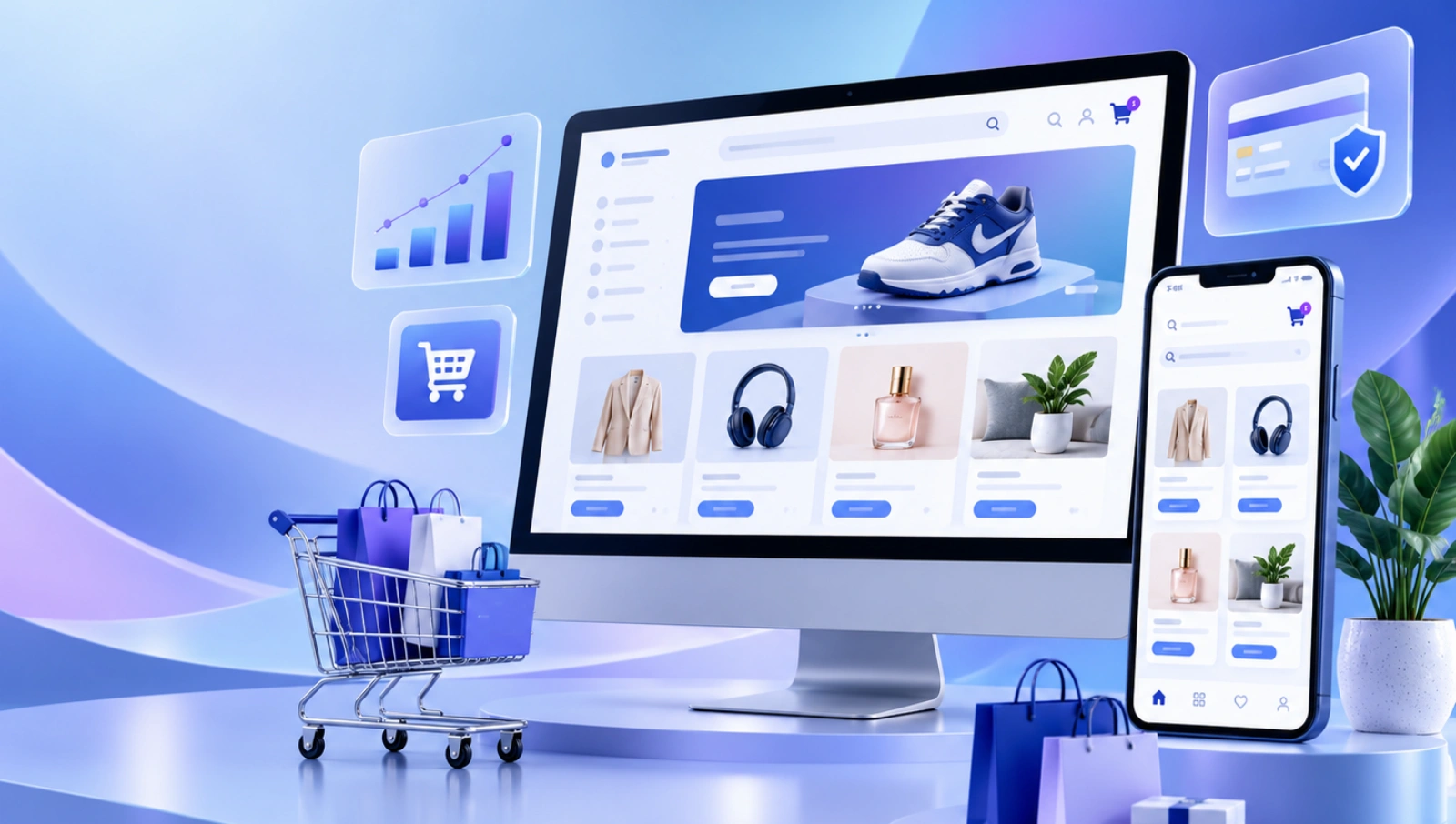
A successful ecommerce website starts with thoughtful design. Customers expect online stores that are simple to navigate, visually engaging, mobile-friendly, and easy to use. A professional ecommerce website design helps businesses present products effectively, improve customer interactions, and create smoother shopping experiences.
EchoPx is a custom ecommerce website design and development company helping businesses build scalable, user-friendly, and conversion-focused online stores. EchoPx combines ecommerce UI UX design, responsive layouts, and business-focused development approaches to create websites aligned with customer expectations and business goals. We describe our approach to Best Ecommerce Website Design as one built on the specific outcomes below — not a claim of any external ranking or award.
Modern ecommerce website design requires more than attractive visuals. It requires clear product presentation, intuitive navigation, optimized shopping journeys, and flexible structures that support business growth.
Get a Free Quote
Why Ecommerce Website Design Matters
Ecommerce website design plays an important role in how customers discover products, evaluate options, and complete purchases. A well-designed online store creates confidence, improves usability, and helps businesses communicate their value effectively.
EchoPx provides ecommerce website design services focused on creating customized digital shopping experiences. Every business has different products, customers, and operational requirements. A custom ecommerce design approach allows websites to be developed around specific business needs rather than using generic layouts.
Professional ecommerce website design includes multiple elements such as homepage structure, product page design, navigation systems, mobile responsiveness, checkout experience, and visual presentation. Businesses looking for ecommerce website designers need solutions that balance creativity with functionality. EchoPx focuses on creating designs that support customer engagement while maintaining practical business operations — a modern ecommerce website should help customers quickly understand products, find information easily, and complete shopping activities without unnecessary complexity.
Design Challenges Businesses Commonly Face
Businesses often face several design challenges when developing or upgrading ecommerce websites. Poor design can reduce customer engagement, complicate the shopping experience, and make website management more difficult. An effective ecommerce web design strategy should align customer expectations with business goals while prioritizing usability, performance, scalability, and operational efficiency. A well-designed ecommerce website makes it easy for customers to browse products, navigate pages, and complete purchases while enabling businesses to manage their online stores efficiently and adapt to future growth. Common ecommerce web design challenges include:
- Creating a website that is attractive and easy to use
- Helping customers find products quickly
- Designing effective product pages
- Maintaining consistency across desktop and mobile devices
- Creating smooth shopping experiences
- Improving outdated ecommerce website layouts
The EchoPx Solution
EchoPx provides custom ecommerce website design solutions focused on usability, business requirements, and scalable digital experiences. The design process begins with understanding business goals, product categories, customer journeys, and required functionality. Based on these requirements, EchoPx creates ecommerce designs that support effective browsing, product discovery, and online purchasing.
EchoPx focuses on ecommerce UI UX design, responsive ecommerce website design, mobile ecommerce website design, ecommerce homepage design, ecommerce product page design, and ecommerce landing page design. With 19+ years of experience, 1500+ clients, and 1700+ projects, EchoPx brings experience and business understanding to ecommerce website projects.
Ecommerce Website Design Services
Custom Ecommerce Website Design
Creates unique online store experiences based on business requirements, products, and customer expectations.
Ecommerce UI UX Design
Focuses on navigation, customer journeys, layouts, and interactions that make online shopping easier.
Responsive Ecommerce Website Design
Ensures ecommerce websites provide consistent experiences across different screen sizes.
Mobile Ecommerce Website Design
Helps businesses provide convenient shopping experiences for customers using smartphones.
Ecommerce Homepage Design
A well-planned homepage helps communicate brand value, highlight products, and guide customers.
Ecommerce Product Page Design
Focuses on presenting product details, images, information, and purchasing options clearly.
SEO Friendly Ecommerce Website Design
Structures websites to support search visibility and better content organization.
Ecommerce Website Redesign Services
Helps businesses improve outdated ecommerce experiences with modern layouts and improved usability.
Ecommerce Website Design Process
Requirement Understanding
EchoPx understands business goals, customer expectations, products, and design requirements.
Planning
Website structure, user journeys, design direction, and required features are planned.
Design
Custom ecommerce layouts and user interface designs are created.
Development
Approved designs are converted into functional ecommerce websites.
Testing
The website is reviewed for usability, responsiveness, and functionality.
Deployment
The completed ecommerce website is prepared for launch.
Support
Ongoing support helps businesses improve and update their ecommerce websites.
Benefits of Professional Ecommerce Website Design
Improved Customer Experience
Professional ecommerce design helps improve how customers browse and interact with a store.
Better Product Presentation
Structured website layouts help showcase products clearly.
Responsive Shopping Experiences
Consistent experiences across devices support more customers.
Flexible Design Solutions
Designs are based on individual business requirements.
Improved Usability & Engagement
Easier navigation supports stronger customer engagement.
Scalable Design Foundation
Ecommerce designs are built to support future business growth.
Industries EchoPx Supports
Ecommerce website design solutions can help create organized digital experiences, improve customer interactions, and support online operations across a range of industries.
Why Choose EchoPx
EchoPx focuses on custom ecommerce website design and development with a business-focused approach. EchoPx helps businesses create ecommerce websites that combine professional design, practical functionality, and scalability. Businesses choose EchoPx for:
- 19+ years of experience
- 1500+ clients
- 1700+ projects
- Custom ecommerce solutions
- Technology expertise
- Understanding of business requirements
Frequently Asked Questions
What is ecommerce website design?
Ecommerce website design is the process of creating online store layouts, user experiences, and visual structures that help customers browse and purchase products.
Why is professional ecommerce website design important?
Professional ecommerce design helps businesses create better customer experiences through organized layouts, responsive design, and simple navigation.
Does EchoPx provide custom ecommerce website design services?
Yes, EchoPx provides custom ecommerce website design services based on business requirements and customer needs.
Can ecommerce website design include mobile optimization?
Yes, responsive and mobile ecommerce website design helps create consistent experiences across devices.
What ecommerce design features can be developed?
Ecommerce designs can include homepage design, product pages, landing pages, navigation systems, and customer-focused shopping flows.
How does EchoPx approach ecommerce website design projects?
EchoPx follows requirement understanding, planning, design, development, testing, deployment, and support processes.
Build a Professional Ecommerce Website With EchoPx
Create a custom online store design focused on usability, customer experience, and business requirements.
Email: info@echopx.com · Related: Ecommerce Web Design Bangalore · Ecommerce Web Design Company Bangalore
Ecommerce Website Design for Different Business Models
A single ecommerce layout rarely suits every business. A store selling a small collection of premium products usually needs a different information hierarchy from a retailer managing thousands of SKUs, and a B2B buyer researching bulk pricing behaves very differently from a consumer browsing on a phone during a lunch break. Custom ecommerce website design starts by identifying which of these patterns actually describes the business, rather than applying one template to every project.
EchoPx plans ecommerce website design and development around catalogue size, product attributes, buyer type, and the operational rules that sit behind the storefront, so the finished site matches how the business actually sells rather than forcing the business into a generic structure.
Curated & Premium Catalogues
Fewer products with more space for photography, storytelling, and detail — layouts favour larger imagery and longer product narratives over dense grids.
High-Volume Retail Catalogues
Thousands of SKUs need strong category structures, fast filtering, and consistent templates so new products slot in without extra design work.
B2B & Account-Based Buying
Bulk pricing, quotation requests, repeat ordering, and account-specific catalogues often matter more than the visual merchandising a consumer store relies on.
Helping Customers Find the Right Product Faster
Visitors reach an ecommerce website through search engines, paid campaigns, social media, or a direct visit, and each of them needs to understand where they are and what to do next almost immediately. Product discovery is less about any single page and more about how category pages, internal search, filters, sorting, and related-product links work together to move a visitor from a broad interest to a specific product.
- Logical category and subcategory structures
- Internal search built for how customers actually phrase queries
- Filters based on attributes customers actually shop by
- Sorting options for price, relevance, and popularity
- Related and complementary product suggestions
- Breadcrumbs and contextual navigation between categories
What Sits Behind the Storefront: Ecommerce Website Development
Design decisions and technical implementation influence each other, which is why ecommerce website development is planned alongside design rather than after it. A store's catalogue structure, customer accounts, order handling, payment processing, and content management all shape how pages need to be built, and a scalable foundation matters from day one so the site can grow without a rebuild.
Product Catalogue Architecture
Structures categories, attributes, and variants so the catalogue stays manageable as it grows.
Customer Accounts
Order history, saved details, and account-specific pricing where the business model needs it.
Payment & Checkout Logic
Checkout flows built around how the business actually wants to process and confirm orders.
Content Management
Editable content areas so campaigns, collections, and product updates don't require developer involvement each time.
Third-Party Integrations
Connections to payment gateways, inventory, marketing, and analytics tools as the project requires.
Scalable Foundations
Technical decisions made with future catalogue growth and added functionality in mind.
Signs an Ecommerce Website Is Ready for a Redesign
Not every ecommerce website needs a rebuild — but some signals suggest the current site is holding the business back rather than supporting it. A redesign works best when it starts by identifying exactly what isn't working, rather than changing everything at once, and existing strengths can be kept while the confusing or outdated parts are reworked.
- Navigation that no longer matches the current catalogue
- Inconsistent behaviour between mobile and desktop
- Product pages that don't answer common customer questions
- A visual style that no longer reflects the brand
- Difficulty adding new categories, campaigns, or content
- A checkout flow customers regularly abandon
Content, Brand Consistency, and Everyday Usability
Design and content work together rather than as separate exercises. Customers often need information about delivery, sizing, compatibility, returns, or usage before they buy, and giving that information a clear place in the layout reduces the questions a business has to answer manually later. At the same time, a store is part of the wider brand — typography, colour use, imagery, and tone should feel connected across the homepage, category pages, and product pages rather than shifting from section to section.
Usability matters just as much once the visual system is in place. Large catalogues, high-resolution imagery, and third-party integrations can all slow a page down if they aren't planned for, so image handling, layout efficiency, and clear interactions are considered as part of the same process rather than addressed after launch. EchoPx keeps these three areas — content, brand consistency, and everyday usability — connected throughout a project, and can support ongoing updates through ecommerce website maintenance once the store is live, alongside ecommerce SEO services for businesses that want their content to support search visibility as well as customers.
Ecommerce Website Design and Development in Bangalore
EchoPx works with businesses in Bangalore that want to discuss catalogue structures, design direction, and development requirements directly with a local technology team. Whether the project is a new online store, a redesign of an existing one, or ongoing support for a growing catalogue, a local point of contact can make it easier to move from initial requirements to a working website. Businesses evaluating ecommerce web design, ecommerce web development, or ecommerce developers in Bangalore are welcome to use this page as a starting point for that conversation.
More Ecommerce Website Questions
What is the difference between ecommerce web design and ecommerce web development?
Ecommerce web design focuses on the visual structure, navigation, and shopping experience. Ecommerce web development builds the functionality — catalogue, accounts, checkout, and integrations — that makes the design work as a live store.
Can EchoPx redesign an existing ecommerce website instead of starting from scratch?
Yes. An ecommerce website redesign can be planned around what's actually not working — navigation, mobile behaviour, product presentation, or checkout — while keeping the parts of the existing site that already work well.
Can an ecommerce website support a large or growing product catalogue?
The right structure depends on the business, but ecommerce website development can be planned around categories, attributes, filters, and search so a catalogue can grow without the site becoming harder to navigate.
Can ecommerce website design account for business-specific workflows, not just visual layout?
Yes. Custom ecommerce development can be planned around specific business rules — account-based pricing, bulk ordering, quotation requests, or other workflows — alongside the visual design.
Shopify Website Design and Development
Businesses building on Shopify still need the same design thinking as a fully custom store — the platform provides the infrastructure, but the storefront still has to reflect the brand, present the catalogue clearly, and guide customers toward checkout. Shopify website design balances what the platform already handles well against what needs to be built or customised for a specific business.
EchoPx provides Shopify website development that covers theme customisation, storefront layout, app integrations and ongoing store management, so a Shopify store looks intentional rather than templated while remaining practical for the team running it day to day.
Shopify Theme Customisation
Adapting or building a Shopify theme around brand colours, typography and layout instead of leaving a store looking off-the-shelf.
Shopify Storefront Design
Homepage, collection and product page layouts designed for how the specific catalogue needs to be browsed and compared.
Shopify App & Integration Setup
Connecting payment, shipping, reviews and marketing apps without cluttering the storefront or slowing it down.
Shopify Store Migration
Moving an existing store onto Shopify while carrying over catalogue structure, SEO value and customer data carefully.
How Ecommerce Website Design Needs Differ by Industry
The same design principles apply across industries, but what customers need from a page changes depending on what's being sold. A design approach that works well for one type of catalogue can leave a different business under-serving its customers.
Manufacturing & Industrial Products
Buyers often need specifications, certifications and technical documentation alongside the product itself, so pages are designed to surface detailed information rather than rely on imagery alone.
Healthcare & Wellness
Product and service information needs to be presented clearly and accurately, with structured layouts that make usage, compliance and safety details easy to find.
Retail & Consumer Goods
Browsing and discovery matter most — strong imagery, fast filtering and an efficient path from category to checkout keep casual visitors moving toward a purchase.
Professional & B2B Services
Purchases are often enquiry-driven rather than instant, so the design leans on clear service breakdowns, quotation requests and contact paths instead of a standard cart flow.
How to Choose the Right Ecommerce Website Design Partner
Most ecommerce projects involve more than picking a visual style. The right partner should understand the business behind the storefront — the products, the customers, and the operational workflow — and be able to explain how design decisions connect to that.
- A portfolio that includes catalogues similar in size or complexity
- Technical planning behind the visual design, not just layouts
- A clear process and defined communication through the project
- Willingness to understand business-specific requirements
- Support available after launch, not only during the build
- Ability to scale the design as the catalogue or business grows
Businesses evaluating a custom ecommerce development partner, comparing ecommerce platform development options, or planning a build around ecommerce website development requirements can review EchoPx's approach on the About EchoPx page or start a conversation through Contact EchoPx.
Shopify Ecommerce Website Questions
Can Shopify stores receive custom design improvements?
Yes. Shopify stores can be customised with improved layouts, branding elements, navigation structures, product presentation and user experience enhancements based on business requirements.
Why choose Shopify for an ecommerce website?
Shopify provides a flexible ecommerce platform that helps businesses manage products, orders and customer interactions while supporting professional online store experiences.
Can EchoPx design a custom Shopify ecommerce website?
Yes. EchoPx can create custom Shopify ecommerce website designs focused on business requirements, customer experience and responsive shopping experiences.
Can Shopify ecommerce websites be designed for mobile users?
Yes. Shopify ecommerce website design can include responsive layouts that provide smooth browsing and shopping experiences across mobile devices, tablets and desktops.
What Shopify ecommerce website features can be customised?
Shopify websites can include customised storefront designs, product pages, collection layouts, navigation structures, user experience improvements and integrations based on project needs.
Can an existing Shopify store be redesigned instead of rebuilt from scratch?
Yes. An existing Shopify store can be redesigned to improve visual experience, navigation, product presentation and usability while retaining suitable existing ecommerce functionality.
Can Shopify support a growing product catalogue?
Yes. Shopify can support growing product catalogues with organised product management, collections, product variants, inventory handling and scalable ecommerce features. The store structure should be planned properly so products remain easy for customers to discover and simple for the business team to manage.
How does EchoPx approach Shopify ecommerce website design projects?
EchoPx follows a structured process that includes requirement understanding, planning, design, development, testing, deployment and support, applied to Shopify's theme and app ecosystem to create ecommerce solutions aligned with business goals.
Accessibility in Ecommerce Website Design
Not every visitor browses or shops the same way. Some rely on a keyboard instead of a mouse, some use screen readers, and many simply benefit from clearer contrast and larger touch targets. Building accessibility into ecommerce website design from the start means more customers can actually browse and buy, rather than getting stuck at a menu, a form, or a low-contrast button.
- Sufficient colour contrast for text, buttons, and form fields
- Menus and filters that work with keyboard navigation alone
- Descriptive alt text on product and category images
- Readable font sizes and spacing across devices
- Visible focus states so keyboard users know where they are
- Form labels and error messages that work with screen readers
Trust Signals and Conversion-Focused Design Elements
Customers decide whether to trust an unfamiliar store within seconds of landing on it. Design choices — not just copy — do a lot of that work, by making the information customers look for before buying easy to find rather than buried in a footer link.
Security & Payment Badges
Visible indicators at checkout that reassure customers their payment details are handled securely.
Reviews & Ratings Placement
Customer feedback shown close to the product, not tucked away where it goes unnoticed.
Clear Shipping & Returns Information
Delivery timelines and return policies visible before checkout, not discovered afterward.
Cart and Checkout Design That Reduces Abandonment
A lot of lost sales happen after a product is already in the cart. Checkout design focuses on removing the small frictions — unclear steps, unexpected costs, or too many required fields — that make a customer close the tab instead of completing an order.
- Guest checkout options alongside account creation
- Only the form fields actually needed to complete an order
- A visible progress indicator through checkout steps
- Payment methods shown before the final step, not as a surprise
- A cart that stays visible and editable throughout checkout
- Clear, specific error messages instead of generic form failures
More Design Quality Questions
Does ecommerce website design consider accessibility standards?
Yes. A well-planned ecommerce website design considers accessibility, clear navigation, readable content, and user-friendly interactions to create better experiences for different users.
Can ecommerce website design help reduce cart abandonment?
Yes. Effective ecommerce website design can simplify navigation, improve product discovery, create clearer checkout journeys, and help customers complete purchases more easily.
Are trust signals part of ecommerce website design?
Yes. Ecommerce website design can include trust-focused elements such as clear product information, transparent communication, secure shopping experiences, and professional layouts.
What makes a good ecommerce website design?
A good ecommerce website design combines responsive layouts, user-friendly navigation, attractive product presentation, clear information, and smooth shopping experiences.
Why is responsive ecommerce website design important?
Responsive ecommerce website design ensures customers can browse and shop comfortably across desktops, tablets, and mobile devices.
Does ecommerce UI UX design affect customer experience?
Yes. Ecommerce UI UX design helps improve product discovery, navigation, usability, and the overall shopping journey.
Does ecommerce website design consider page loading speed?
Yes. Image handling, layout weight, and script use are considered as part of ecommerce website design, since a slow page undermines even a well-designed layout.
Can ecommerce website design work with existing branding guidelines?
Yes. Ecommerce website design can follow existing brand colours, typography, and tone so the online store feels consistent with a business's established identity.