
Custom Ecommerce Website Design & Development
Best E Commerce Website in India: Build a Store That Fits Your Business
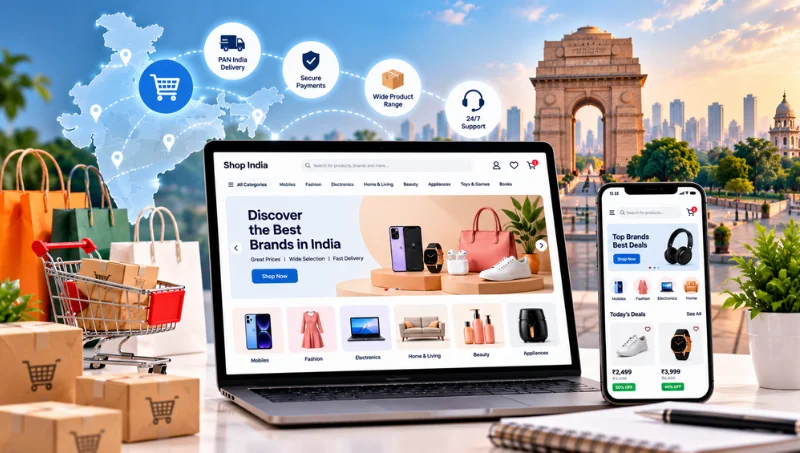
The best e commerce website in India is not defined by a single template, a long list of features or a popular name. For your business, it is an online store that helps customers discover products, understand what they are buying, complete orders and return with confidence. Behind the storefront, your team also needs practical tools to manage products, customers, payments, orders and deliveries.
EchoPx develops custom ecommerce websites with business-focused functionality and user-friendly shopping experiences. Whether you are planning a new online store or improving an existing selling experience, we help connect the customer journey with the day-to-day tasks involved in running an ecommerce business.
- Custom ecommerce website design
- Custom ecommerce website development
- Product catalogue and variations
- Shopping cart and wishlist
- Checkout and order confirmation
- Payment integration
- Shipping and delivery
- Customer accounts
- Order management
- Admin dashboard
- Theme and content
- Maintenance and support
Enquiry form
Get a Free Quote
What to include in your enquiry
- What you sell and how your catalogue is organised
- How customers buy, pay and receive orders
- What your team needs to manage after launch
Prefer to talk first? Call +91 97399 66977 or email info@echopx.com.
- 19+Years of experience
- 1,500+Clients
- 1,700+Projects
- 6Evaluation criteria
Introduction
What Does “Best” Mean for Your Ecommerce Website?
A website can look attractive but still create friction if products are difficult to locate, variations are unclear or the checkout process is confusing. Another store may have a clean storefront but require staff to manage product updates and orders manually. Effective ecommerce development considers both sides, because a positive buying experience depends on the systems that support it.
The right website structure depends on the products you sell, the information customers need before purchasing and the way your business handles transactions and fulfilment. A strong starting point is to identify the core shopping journey and operational requirements before deciding which additional features matter most.
The chart in this section shows the idea: a store is judged on how well it fits across six areas, not on a single ranking.
Search intent
Two Different Needs Behind One Search
Searches for the best ecommerce website in India often mix two different needs.
Shoppers
Shoppers may be looking for an existing online shopping destination.
Business owners
Business owners may be researching how to build a website that customers prefer using.
This guide addresses the second need: how to make thoughtful decisions when planning a custom ecommerce website for an Indian business.
Business challenges
Business Challenges: Why Some Ecommerce Websites Feel Difficult to Use
Five problems that make an online store harder to shop from and harder to run.
Customers cannot find the right products
Unclear category structures and inconsistent product descriptions make it hard for visitors to browse confidently. When a customer does not know where to begin, even a large product catalogue can feel limited. Thoughtful categories, search and product listing pages help shoppers move from interest to a relevant product.
The product page leaves questions unanswered
A product title alone is rarely enough. Shoppers may want to compare variations, inspect images, review available bundles or understand the item before adding it to the cart. A useful product detail page should support informed choices rather than require the customer to contact the business for every basic question.
Checkout introduces unnecessary uncertainty
A cart should show the selected items and quantities clearly. Buyers also need to understand address selection, payment selection and the outcome of an order. If these steps are disconnected, the path from product discovery to order confirmation becomes harder than it needs to be.
Store administration takes too much effort
Managing a store involves far more than publishing pages. Teams need to add products, maintain categories, review orders, update order statuses, follow payment states and respond to customer-related activity. When operational tools are overlooked, administration becomes more complicated as the catalogue and order volume evolve.
The website no longer fits the business
A store built around an early, narrow requirement may become awkward when product ranges, promotional needs or delivery arrangements change. Custom ecommerce website development starts with an understanding of current processes and anticipated change so the solution is shaped around the business rather than forcing the business into an unsuitable workflow.
The solution
EchoPx Solution: Custom Ecommerce Websites Built Around Real Workflows
EchoPx approaches ecommerce website design and development as a connected solution comprising the storefront, product catalogue, customer experience and administrative functions. Instead of treating the homepage as the whole project, the scope considers the customer actions and internal tasks needed to support online selling.
The ecommerce solution documented by EchoPx includes an ecommerce website, admin panel, API backend, product and customer management, shopping cart and wishlist, checkout, payment and shipping functions, CMS pages and theme management. The exact configuration for a project should be discussed in relation to its business requirements.
For businesses researching the best ecommerce website design in India, customization matters because the product catalogue, audience expectations and order processes can vary. A practical design should make familiar tasks straightforward while letting the store reflect the business’s identity.
The documented ecommerce solution
Ecommerce website · Admin panel · API backend · Product and customer management · Shopping cart and wishlist · Checkout · Payment and shipping functions · CMS pages · Theme management
Storefront and administration
Frontend and Administration Need to Work Together
Customers experience the storefront, but the business operates the store through product, customer, order, theme and settings controls. A development project should therefore review customer-facing actions and administration actions as one system.
For example, a product created in the administration environment should appear correctly in category pages, search results and product-detail pages. A customer order should carry the right payment and shipping information into the administration workflow. Status changes should remain understandable to both the internal team and the customer.
Checks that span both sides
- A product created in admin appears correctly in category pages, search results and product-detail pages
- A customer order carries the right payment and shipping information into the admin workflow
- Status changes stay understandable to both the internal team and the customer
Services
Core Services and Features for an Effective Ecommerce Website
Thirteen service and feature areas, grouped by where they sit in the store, starting with design, development and support.
Custom ecommerce website design
A custom storefront brings brand presentation, category navigation, product pages and calls to action into a coherent customer journey. EchoPx focuses on clear shopping flows and user-friendly ecommerce UI/UX design. Design decisions should support the product information customers need, not simply decorate the page.
Custom ecommerce website development
Development connects visual interfaces to essential shopping and administration functions. A custom ecommerce website India project can be planned around the interactions between catalogue, cart, checkout, customer accounts and order processing. This keeps scope tied to how the business actually sells.
Maintenance and support
Ecommerce websites require ongoing attention as product information, business needs and customer expectations change. EchoPx lists ecommerce maintenance and support among its services. The particular maintenance activities and support arrangements should be agreed for each project.
Catalogue, cart and checkout
Catalogue, Cart and Checkout Features
Product catalogue and variations
EchoPx’s documented product capabilities include product creation and management, categories, attributes and variations, images, bundles, reviews, search, and listing and detail pages. These functions allow product information to be organized so customers can browse options and teams can maintain the catalogue.
Shopping cart and wishlist
Cart functions support adding products, updating quantities, removing items and reviewing a cart summary. Wishlist management gives customers a way to keep track of items they may want to revisit. Both experiences should make selections visible and understandable.
Checkout and order confirmation
Checkout capabilities include address selection, order creation, coupon and loyalty support, payment selection and order confirmation. The priority is a logical transition between cart review and a completed order, with the information and choices the customer needs at each point.
Payments, shipping and accounts
Payment, Shipping and Customer Account Features
Payment integration and status handling
EchoPx’s approved feature database includes online payment integration support, cash-on-delivery support, payment status tracking and failed-payment handling. The appropriate payment setup and any provider-specific details should be confirmed during scoping rather than assumed from a keyword search.
Shipping and delivery management
Shipping zones, delivery charge calculations, delivery information management and shipping status tracking help connect orders with fulfilment. Businesses can discuss how these functions should reflect their delivery arrangements and what information buyers should see before and after placing an order.
Customer account management
Customer registration and login, OTP verification, password reset, profiles, multiple shipping addresses and order history are listed capabilities. Account design should help repeat customers access the information they need without making routine actions unnecessarily difficult.
Administration and content
Administration, Content and Connectivity Features
Order management and admin dashboard
Documented functions include customer order tracking, order details, invoice downloads, admin order management, status updates and controls for products, categories, customers, reviews, refunds, tickets, themes and website settings. Clear administration supports consistent store operations.
Theme and content management
Theme switching, customization, banner management, homepage sections, fonts, colours and CMS pages help a business present information across the storefront. Content and theme tools are particularly useful when promotions, messaging or product emphasis change.
API backend and mobile connectivity
EchoPx documents authentication, product, cart, order and customer APIs, mobile app connectivity support and Android APK support. Any mobile-related scope should be defined separately, including the relevant experiences and integration requirements.
Product management
How Product Management Shapes Ecommerce Website Development
Product management is the foundation of the online store. Categories influence navigation, attributes and variations influence product selection, images influence product understanding, and bundles or reviews may change how product-detail pages are structured.
Before development begins, define the data the business can maintain consistently. The website should not depend on product information that will be difficult to manage after launch. A clear catalogue model makes search, listings, detail pages and administration easier to keep aligned.
Categories
Influence navigation
Attributes and variations
Influence product selection
Images
Influence product understanding
Bundles or reviews
May change how product-detail pages are structured
Checkout, payment and orders
How Checkout, Payment and Orders Connect
Checkout should not be treated as a standalone page. Address selection, coupons, loyalty support, payment selection and order confirmation can all affect the final order.
Payment status and failed-payment handling then need to stay connected with order management. Customers may need order history, order details, invoice download and tracking, while administrators need order-management controls and order/payment status updates.
From checkout to order
- Address selection
- Coupons and loyalty support
- Payment selection
- Order confirmation
- Payment status and failed-payment handling
- Order history, details, invoice and tracking
Shipping
How Shipping Fits into Ecommerce Website Development
Shipping can affect checkout, delivery charges, order communication and post-purchase tracking. Approved capabilities include shipping zones, delivery-charge calculation, delivery information management and shipping-status tracking.
The shipping model should be documented before launch so the development team and business team agree on how delivery charges are calculated and what information customers see.
Approved shipping capabilities
- Shipping zones
- Delivery-charge calculation
- Delivery information management
- Shipping-status tracking
What to evaluate
What to Evaluate When Choosing the Best Ecommerce Website for Your Business
Six criteria for judging fit. The first three focus on the shopper's side of the store.
Fit with the business model
Start with the buying process. Do customers select straightforward items, compare variations, order multiple products or need customer accounts? The answers determine which screens and functions deserve priority.
Ease of product discovery
Review how categories, product titles, images and search work together. A structure that mirrors customer questions is generally more useful than a catalogue organized only around internal product codes.
Checkout clarity
Check that buyers can review their cart, choose an address, understand payment options and recognize order confirmation. Every unnecessary question or disconnected step adds cognitive effort.
The business side
Operations, Adaptability and Budget
The other three criteria focus on the business side of the store.
Operational manageability
Consider who will update products, handle orders, review payment status, manage shipping details and respond to customers. The best-looking storefront is less valuable if routine administration is impractical.
Ability to adapt
Plan for catalogue updates, new products, different promotions and changing operational needs. Discuss the likely direction of the store before locking down the development scope.
Budget matched to scope
Instead of looking for one universal price, identify essential launch requirements and enhancements that can be evaluated separately. A meaningful quote should reflect the actual pages, features and integration work involved.
Process
A Practical Ecommerce Website Development Process
Six stages from business requirements to launch and ongoing improvements.
Discover the business requirements
Define the products, target users, product variations, customer account needs, payment preferences, delivery arrangements and administrative roles. This creates a shared understanding of the store before interface work begins.
Plan information architecture and shopping flows
Map the catalogue, categories, product detail pages, cart, checkout and account journeys. Identify where customers need to make a choice and what details they should see to make it confidently.
Design the user experience
Develop a visual direction that supports the brand while keeping navigation and shopping actions clear. Examine how key pages work across screen sizes and how the design handles different product types.
Develop the storefront and management tools
Implement the approved feature scope, connecting the shopping experience with catalogue, customer, order, payment and shipping functions. The goal is consistency between what shoppers see and what administrators can manage.
Review important user journeys
Check product discovery, variations, cart updates, checkout selections, order confirmation and the corresponding administration flows against the agreed requirements. Record and address gaps before publishing.
Launch and plan ongoing improvements
Prepare the content, product catalogue and store settings for launch. Discuss ongoing maintenance needs and prioritize future changes according to customer feedback and business operations.
Phasing
Launch-Critical Requirements vs. Future Enhancements
Separating launch-critical functionality from later enhancements can make ecommerce site development easier to define. The first release may focus on the product catalogue, customer accounts, cart, checkout, payments, orders, shipping and administration needed to operate the store.
Additional APIs, mobile connectivity or more detailed catalogue workflows can be considered later when there is a clear business use case. This gives the business a clearer picture of what must be ready for launch and makes development proposals easier to compare.
The first release may focus on
- Product catalogue
- Customer accounts
- Cart
- Checkout
- Payments
- Orders
- Shipping
- Administration
Can be considered later
- Additional APIs
- Mobile connectivity
- More detailed catalogue workflows
Project type
Developing a New Ecommerce Website vs. Improving an Existing Store
A new ecommerce website
A new ecommerce website can define the catalogue, customer journey, checkout, payment, shipping and administration workflows from the beginning.
Improving an existing store
An existing store may instead need selected improvements to catalogue structure, product pages, customer accounts, cart, checkout, payment handling, orders, shipping, themes, CMS pages or administration.
Each improvement should be connected to a defined requirement. Catalogue growth may justify category or listing changes, new product options may require product-detail updates, and operational changes may require checkout, order or shipping refinements.
Before launch
Operational Readiness Before Launch
A completed ecommerce website should leave the internal team with a clear understanding of how the store is managed. Products, categories, customers, orders, reviews, refunds, tickets, themes and website settings need defined ownership.
The final review should confirm how product information is maintained, how order and payment statuses are updated, which theme or CMS changes can be handled internally, and which future changes may need development support.
Areas that need defined ownership
Products · Categories · Customers · Orders · Reviews · Refunds · Tickets · Themes · Website settings
After launch
Planning Ecommerce Maintenance After Launch
An ecommerce website continues to change after launch. Products and categories evolve, banners and homepage sections change, CMS pages are updated and workflows may need refinement.
A maintenance plan should distinguish routine updates that can be handled through product, theme, CMS and administration controls from functional changes that may require development support.
Routine updates through your controls
- Products and categories
- Banners and homepage sections
- CMS pages
- Theme and settings changes
Changes that may need development support
- Refined or new workflows
- New functional requirements
Benefits
Benefits of a Well-Planned Custom Ecommerce Website
An experience aligned with your products
Customers can navigate categories, read useful product information and choose variants through a layout designed for the catalogue.
A clearer path to purchase
Cart review, address choice, payment selection and order confirmation work together as one journey.
More practical store administration
Products, customers, orders, payment statuses and shipping details can be handled through documented management capabilities.
More consistent brand presentation
Themes, banners, homepage sections and CMS pages help maintain a coherent storefront.
Room for evolving requirements
A custom development discussion can account for planned catalogue expansion, new operational needs and future enhancements.
A shared framework for investment
Separating essentials from optional features makes development scope and cost conversations more specific.
These benefits describe the purpose of the design and feature decisions; they should not be interpreted as guaranteed increases in traffic, sales, rankings or revenue.
Industries
Industries and Business Models That Can Use Custom Ecommerce Development
An effective ecommerce website can take different forms depending on what it sells.
Apparel and lifestyle
Apparel and lifestyle businesses may emphasize images, categories and variants.
Home and furnishing
Home and furnishing stores may need detailed product pages and thoughtful catalogue organisation.
Beauty and personal care
Beauty and personal care brands may focus on product information, bundles and account-based repeat buying.
Electronics and accessories
Electronics and accessories sellers may need clear attributes and comparison-ready descriptions.
Specialty retailers, distributors and businesses selling to other businesses may have distinctive catalogue and ordering requirements. The relevant question is not whether an industry uses ecommerce—it is which customer and administrative journeys the particular business needs. EchoPx can discuss custom ecommerce functionality based on that scope without assuming that every project uses the same configuration.
Cost and scope
Ecommerce Website Development Cost in India: What Determines the Scope?
There is no single reliable price for the best ecommerce website in India because businesses do not share identical requirements. The number and complexity of product categories, customer account flows, custom design work, payment setup, shipping configurations, admin functions and any API or mobile connectivity needs can change the amount of development work involved.
What changes the amount of work
- Product categories
- Customer account flows
- Custom design work
- Payment setup
- Shipping configurations
- Admin functions
- API or mobile connectivity
Comparing proposals
Comparing Ecommerce Website Proposals
When comparing proposals, ask what is included rather than comparing headline numbers in isolation. Clarify whether product data preparation, theme customization, testing, launch activities and ongoing maintenance are in scope. A smaller requirement can be planned differently from a store with extensive variations, multiple operational workflows or more advanced administrative needs.
EchoPx does not publish a fixed price. Request a requirements-based discussion to establish an appropriate scope and quotation rather than relying on an invented starting figure.
Clarify whether these are in scope
- Product data preparation
- Theme customization
- Testing
- Launch activities
- Ongoing maintenance
How people search
How Businesses Search for the Best Ecommerce Website in India
Buyers describe the same need in many ways. These are search phrases, not claims; they are grouped by what the buyer is trying to find out.
Core searches
Best e commerce website in India and best ecommerce website in India are the core searches for this page. Here they mean a business deciding what makes its own store effective, not a ranking of existing shopping brands.
Design searches
Best ecommerce website design India and best ecommerce website design in India describe design decisions that support the catalogue, product information and checkout rather than decoration.
Custom store searches
Custom ecommerce website India and ecommerce website India describe a store planned around one business's products, customers and operations.
Company and developer searches
Ecommerce website development company India, ecommerce website developers in India and ecommerce website development in India describe who builds the store and how the work is planned.
Cost searches
Ecommerce website development cost in India searches are answered on this page with the factors that change the scope, not a fixed or invented starting price.
Ranking searches
This page does not rank shopping brands or claim a top position for EchoPx. It explains how to judge whether a proposed store fits the business.
Why EchoPx
Why Choose EchoPx for Ecommerce Website Development in India?
EchoPx is a custom ecommerce website design and development company focused on scalable, user-friendly and conversion-focused online store solutions. Its primary services cover custom ecommerce design, development, ecommerce UI/UX, product catalogue management, payment integration, ecommerce functionality and maintenance.
For a business evaluating ecommerce website developers in India, the most useful conversation begins with specific needs: which catalogue features are essential, how customers should complete orders and what administrators must manage. EchoPx positions its solutions around these practical questions instead of applying the same shopping experience to every business.
EchoPx’s company figures are 19+ years, 1500+ clients and 1700+ projects. These facts provide company context, while the right decision for a prospective buyer remains whether the proposed solution matches their products, workflow and expected customer journey.
- 19+years
- 1500+clients
- 1700+projects
Office
Find Us in Bangalore, Serving Businesses Across India
EchoPx works from Rajajinagar, Bengaluru. Ecommerce website projects for businesses elsewhere in India are discussed and delivered remotely. Call, email or visit during office hours.
EchoPx office, Bengaluru
177, 19th Main Rd, A Block, Milk Colony, Rajajinagar, Bengaluru 560021
Sri Shakti Devi Karumari Amman Temple
Monday to Friday 10am to 5pm, Saturday 10am to 2pm, closed Sunday
The map loads only when you ask for it, to keep this page fast.
Serving businesses across India, including
- Bangalore
- Mumbai
- Delhi NCR
- Chennai
- Hyderabad
- Pune
- Kolkata
- Ahmedabad
- Jaipur
- Kochi
FAQ
FAQs: Best E Commerce Website in India
What makes the best e commerce website in India for a business?
The most suitable website is one that fits the business’s products, customer expectations and store operations. Clear product discovery, helpful details, usable checkout and practical administrative functions matter more than a universal ranking.
Can EchoPx develop a custom ecommerce website in India?
Yes. Custom ecommerce website design and development is EchoPx’s primary service, with documented functions for product management, customer accounts, cart, checkout, payment, shipping and order management.
Does the best ecommerce website need a custom design?
Not every store requires the same level of visual customization. A custom design is useful when the business needs its own brand presentation, catalogue structure or customer journey. The appropriate scope depends on requirements.
What product management features are available?
The EchoPx feature database includes product creation, categories, attributes, variations, images, bundles, reviews, product search and listing and detail pages.
Does EchoPx support payment integration?
EchoPx lists online payment integration support, cash-on-delivery support, payment status tracking and failed-payment handling. Individual payment arrangements should be confirmed during project planning.
Can customers track orders on the website?
The documented solution includes customer order tracking, order history, order details and invoice downloads, along with administrative order and status management.
What shipping features can an ecommerce website include?
EchoPx’s approved functions include shipping zones, delivery-charge calculations, delivery information management and shipping-status tracking.
Does the solution include customer accounts?
The feature database lists customer registration and login, OTP verification, password reset, profile management, multiple shipping addresses and order history.
Can I manage banners and homepage content?
The documented theme features include banner management, homepage section management, font and colour settings, theme switching and customization, together with CMS pages.
Can an ecommerce website connect to a mobile experience?
EchoPx documents API-based capabilities, mobile app connectivity support and Android APK support. Exact mobile functionality and project scope should be discussed rather than assumed.
How much does ecommerce website development cost in India?
Cost depends on design scope, product catalogue, required customer and order workflows, payment and shipping requirements, and any integrations. EchoPx’s approved information does not specify fixed packages or prices.
How is this page different from “Best E Commerce Sites in India”?
This page helps a business plan and evaluate a single custom ecommerce website. The related Best E Commerce Sites in India page can address the broader characteristics of effective ecommerce sites without repeating the same buyer guide.
Does EchoPx provide maintenance for ecommerce websites?
Ecommerce maintenance and support are among EchoPx’s listed services. The precise activities and terms should be agreed for the individual project.
How do I start a project with EchoPx?
Begin by sharing the products you want to sell, your desired customer journey, required store-management functions and any existing website constraints. This provides a basis for discussing a custom ecommerce solution.
Where is the EchoPx office?
EchoPx is at 177, 19th Main Rd, A Block, Milk Colony, Rajajinagar, Bengaluru 560021, near Sri Shakti Devi Karumari Amman Temple. Office hours are Monday to Friday 10am to 5pm and Saturday 10am to 2pm. See the office details and map on this page.
Which related EchoPx pages should I read next?
Read E Commerce Websites in India, Ecommerce Website Development Company India and Ecommerce Features for more on development and features.
Next step
Plan an Ecommerce Website That Works for Your Business
You do not need to copy another store to create a useful shopping experience. Start with your products, your customers and the operations behind every order. EchoPx helps businesses plan custom ecommerce website design and development around those practical needs.
Tell EchoPx what you want your online store to do—from product discovery and checkout to order management and shipping—and discuss a solution that reflects your business priorities.
Prefer email? Write to info@echopx.com or call +91 97399 66977. Office hours: Monday to Friday 10am to 5pm, Saturday 10am to 2pm.