
Ecommerce App Builders Bangalore
Build an Ecommerce App Around the Way Your Customers Shop and Your Business Operates
A successful ecommerce mobile application is more than a digital product catalogue. It connects customers, products, payments, inventory, fulfilment, marketing and business operations through a convenient mobile experience.
EchoPx provides ecommerce app development services in Bangalore for businesses that want to create customer-facing shopping applications, modernize existing mobile commerce experiences or connect ecommerce applications with their wider digital ecosystem.
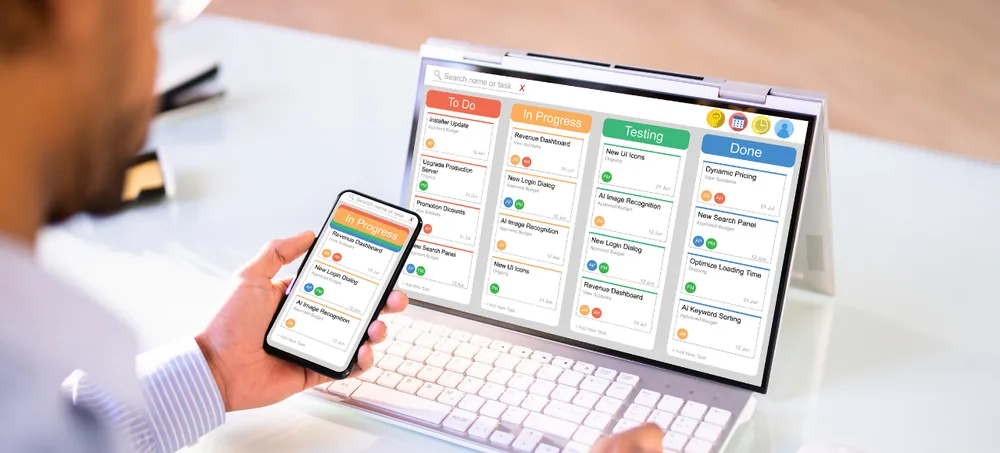
Whether your business needs a B2C shopping application, B2B ordering platform, marketplace application, retailer app, distributor ordering solution or specialized ecommerce experience, the development process should begin with the business model rather than a generic feature checklist.
Our approach to ecommerce application development focuses on understanding how users discover products, compare options, make purchase decisions, complete payments, monitor orders and return for future purchases. At the same time, we consider the operational processes behind each customer interaction, including catalogue management, pricing, stock visibility, order processing, fulfilment, customer service and integrations. For companies searching for ecommerce app builders in Bangalore, EchoPx provides a development approach built around practical requirements, structured workflows and long-term application usability.
Ecommerce Application Development for Bangalore Businesses
Bangalore is home to businesses operating across retail, technology, manufacturing, distribution, services, consumer products and digital-first commerce. Ecommerce applications in these environments can have very different requirements. Because the operating model differs from business to business, effective ecommerce app development requires careful planning before development begins.
Consumer brand: fast product discovery, attractive merchandising and a convenient checkout experience.
Wholesaler: customer-specific pricing, bulk ordering and repeat purchase capabilities.
Marketplace: buyer, seller and administrator workflows.
Distributor: catalogue access, account-based pricing, purchase approvals and order-status visibility.
Retailer: connect its mobile application with inventory, store operations or an existing ecommerce backend.
EchoPx works with businesses to translate commercial and operational requirements into structured ecommerce application functionality.
Why Businesses Need More Than a Basic Ecommerce App
Launching an ecommerce app does not automatically create an effective mobile sales channel. A mobile application can fail to deliver business value when it is disconnected from customer expectations or internal operations. These issues can become more complicated as catalogue size, order volume, customer segments and business processes grow.
Product Discovery Becomes Difficult
Large product catalogues require thoughtful category structures, filtering options, product attributes, search capabilities and product-detail presentation. Without proper information architecture, even a technically functional ecommerce app can make shopping inconvenient.
Mobile Checkout Contains Too Much Friction
Mobile customers expect a checkout experience designed for smaller screens and shorter interactions. Checkout architecture needs to be considered during application planning rather than added as a final screen.
Inventory Information Is Disconnected
Without the right integration architecture, products displayed as available in the application may not accurately reflect operational stock information. The appropriate inventory workflow depends on the systems already being used.
Order Processing Requires Manual Work
Customer orders may need to flow through payment confirmation, stock allocation, fulfilment, shipping and customer communication. If these processes operate independently, teams spend unnecessary time moving information between systems.
A customer may see a simple "Place Order" button, but several operational processes can occur behind that interaction. The ecommerce application therefore needs to address both sides of commerce: a convenient customer journey and a manageable operational workflow.
Ecommerce App Development Solutions from EchoPx
EchoPx develops ecommerce applications according to the functional and operational requirements of each project — covering the customer application, business administration capabilities and integrations required to support ecommerce processes. The exact architecture, features and integrations are determined during requirement analysis.
B2C Ecommerce App Development
Designed around direct interaction between a business and its customers, built around the purchasing behavior and product structure of the business rather than forcing every retailer into the same shopping model.
B2B Ecommerce App Development
Business purchasing follows processes different from consumer ecommerce — simplifying purchasing while respecting the commercial rules that govern business accounts.
Multi-Vendor Marketplace App Development
Marketplace applications require multiple user roles and interconnected workflows; buyer, seller and administrative processes affect one another, so requirements should be defined carefully.
Retail Ecommerce App Development
Another convenient shopping channel while connecting digital interactions with business operations, including inventory or fulfilment systems.
D2C Ecommerce App Development
Strong control over how products are presented and how customers interact with the brand, supporting product education, collections and personalized account experiences.
Wholesale Ordering Applications
Simplify ordering for distributors, dealers, institutional customers and recurring business buyers, transforming repetitive ordering into a structured digital workflow.
Ecommerce App Features Designed Around Business Value
Features should not be included simply because they appear in other shopping applications. Every feature should support a clear customer requirement or business process.
Product Catalogue Management
Organizes products, categories, specifications, variants and images, structured around categories, collections, brands or other attributes.
Product Search
Lets customers look for products using relevant keywords — a direct path from purchase intent to relevant product information.
Filters and Product Sorting
Narrows product listings using attributes relevant to the catalogue so customers can focus on products matching their requirements.
Product Detail Pages
Images, descriptions, attributes, variations, pricing and availability, prioritizing the information customers need before purchasing.
Shopping Cart
A clear overview of intended purchases — quantity changes, removal, variant information and a visible order summary.
Mobile Checkout
Customer identification, delivery and billing information, address management, shipping selection, payment and order confirmation.
Payment Gateway Integration
Integrated according to the payment options and providers selected, accounting for successful and failed transactions and order updates.
Customer Accounts
Access to profile details, saved addresses, previous purchases and current orders — more convenient for returning customers.
Wishlist Functionality
Lets users save products for future consideration across multiple sessions before ordering.
Order Management
Connects the customer-facing purchasing journey with administrative processing, from order creation through fulfilment.
Order Tracking
Displays relevant order states and, where applicable, information received through shipping or logistics integrations.
Push Notifications
Supports customer communication for order-status information, account updates or marketing activities per business requirements.
Offers and Promotions
Coupon codes, discount rules or campaign-specific purchasing conditions, with rules defined during requirement analysis.
Reviews and Ratings
Submission, moderation, display and administrative management workflows for customer feedback where relevant.
Administration Dashboard
An admin dashboard covering products, categories, customers, orders, pricing, promotions, content and reports.
Ecommerce Application Integrations
Modern ecommerce rarely functions as an isolated application. The mobile app may need to communicate with websites, ecommerce platforms, inventory applications, ERP systems, customer-management platforms, payment providers, shipping services or other business applications. EchoPx plans integration requirements as part of the ecommerce development process.
Payment Integrations
Connected according to the chosen commercial setup, accounting for transaction responses and their relationship with order status.
Inventory Integration
Exchanges information between the ecommerce application and the source system — covering update frequency, availability changes and cancelled orders.
ERP Integration
Lets ecommerce orders, customers, products or inventory interact with existing ERP processes, depending on the platform's APIs.
Shipping and Logistics Integration
Connects with shipping-related workflows for relevant fulfilment or tracking information, depending on the provider and delivery model.
CRM Integration
Connects customer information or ecommerce activity with an organization's customer-management process.
Existing Ecommerce Platform Integration
Adds a mobile application to an existing ecommerce website without creating an entirely separate commerce operation.
Ecommerce App Development Workflow
A clear development workflow helps align business expectations, application functionality and technical implementation.
Discovery and Business Requirement Analysis
Understanding what is sold, who the customers are, the commerce model and how inventory, payments and fulfilment currently work.
User Journey Planning
Viewing the application from the perspective of its users — discovery, search, cart, checkout, tracking and repeat purchase.
Functional Scope Definition
Converting requirements into defined modules and workflows, separating essential launch functionality from later phases.
UI and UX Planning
Information hierarchy, product presentation, navigation, calls to action, forms, cart visibility and checkout structure.
Application Architecture
Planning how the mobile application, backend functionality, integrations and data work together.
Ecommerce App Development
Approved screens, functionality and integrations move into customer-facing, backend and administration development.
Integration Development
Third-party and internal systems are connected where required, with testing across how information flows between applications.
Testing
Interface behavior, navigation, search, cart, checkout, payment, order creation, status changes and device-specific behavior.
Deployment Preparation
The application and supporting components are prepared according to the agreed deployment plan for each platform.
Ongoing Enhancement
A structured architecture makes it easier to plan enhancements as catalogues, processes and requirements evolve.
Ecommerce Workflows We Can Help Build
Product-to-Purchase Workflow
Search-to-Checkout Workflow
Repeat Purchase Workflow
Order Processing Workflow
B2B Approval Workflow
Specific approval workflows depend on business requirements.
Marketplace Seller Workflow
Benefits of a Purpose-Built Ecommerce Mobile Application
A Mobile Experience Designed Around Your Business
Custom application development enables the customer experience and workflows to be structured around your actual catalogue, users and operating processes, rather than a generic template.
Direct Customer Access
A dedicated digital touchpoint for customers who prefer interacting with a business through an app.
Simplified Product Discovery
Categories, filters and search designed around the attributes customers actually use when selecting products.
Connected Ecommerce Processes
Product, inventory, payment, order and fulfilment processes exchange information rather than operating as separate systems.
Better Support for Repeat Purchasing
Customer accounts, order histories, wishlists and repeat-order functionality make recurring purchases easier.
Configurable Business Workflows
B2B approvals, marketplace roles, customer-specific pricing and specialized order processes incorporated per project requirements.
Foundation for Future Development
A well-planned application architecture provides a stronger foundation for later feature additions as requirements evolve.
Ecommerce App Development for Different Industries
Different industries require different product structures, buying workflows and operational rules.
Retail Ecommerce
Broad product catalogues, promotions, customer accounts, cart, checkout, payments and order tracking, often with inventory or retail-system integration.
Fashion and Apparel
Product variations such as size, colour, collection and style, with visual presentation and variant selection central to the buying experience.
Electronics
Detailed specifications and product comparisons, with structured technical information and clear product variations.
Grocery and Everyday Products
Fast search, categories, repeat ordering and account-based purchase history, with fulfilment and inventory processes especially important.
Beauty and Personal Care
Products organized by category, type, use case or brand, with content-rich product pages supporting discovery and selection.
Furniture and Home Products
Large images, product dimensions, variations, material information and delivery-related considerations for considered purchases.
Industrial Products
Detailed specifications, product identifiers, customer account logic and bulk quantities, often resembling B2B procurement.
Wholesale and Distribution
Repeat buyers finding products, selecting quantities and placing orders without relying entirely on manual communication.
Food Ordering and Product Commerce
Discovery, cart management, checkout, payment and fulfilment coordination for packaged foods or other orderable products.
Specialty Commerce
Industry-specific product information, ordering logic or account workflows that generic ecommerce applications do not address effectively.
Android and iOS Ecommerce App Development in Bangalore
Android Ecommerce App Development in Bangalore
Android applications represent an important part of many ecommerce strategies. EchoPx can develop Android ecommerce applications based on the required customer journeys and commerce workflows — catalogue browsing, product search, customer accounts, shopping cart functionality, checkout, payments, order history, notifications and integrations according to scope. The development approach considers the entire ecommerce system rather than viewing the Android application as an isolated front end.
iOS Ecommerce App Development in Bangalore
Businesses serving iPhone users may require dedicated iOS ecommerce application functionality. An iOS commerce experience can be built around the same fundamental ecommerce processes while following the technical and interface requirements relevant to the platform. Where both Android and iOS are required, the appropriate development approach can be evaluated according to project requirements.
B2B Ecommerce App Builders in Bangalore
B2B ecommerce deserves specific attention because business buyers frequently operate differently from retail consumers. A typical consumer purchases for themselves; a business customer may purchase for a department, branch, company or downstream customer.
Before developing a B2B ecommerce application, the buying process should be mapped from the initial requirement through approval and order fulfilment. Digitizing a poorly understood workflow can simply move existing complications into an application. EchoPx focuses on defining these processes before translating them into ecommerce functionality.
Multi-Vendor Ecommerce Marketplace App Builders
A marketplace is significantly different from a conventional ecommerce store. In a standard online store, one business typically manages products and sells directly to customers. A multi-vendor marketplace introduces another major stakeholder: the seller — so the application ecosystem may need functionality for buyers, sellers and marketplace administrators.
Who creates product listings, and who approves sellers?
Who controls product information, and how are orders assigned?
How are marketplace rules managed, and how are returns handled?
How are commissions represented, and what can sellers access?
How does the marketplace communicate with customers?
How are disputes or support cases managed?
Answering these questions early reduces ambiguity during development.
Ecommerce App Design Considerations
Mobile-First Navigation
Core shopping categories and actions should be easy to reach from a mobile screen — a desktop menu cannot simply be shrunk and expected to work.
Product Information Hierarchy
The most relevant purchasing information should appear prominently; fashion buyers may prioritize images, technical buyers may need specifications earlier.
Clear Calls to Action
Buttons for adding products, purchasing, updating quantities and proceeding to checkout should have clear purposes.
Form Simplicity
Only information required for the relevant workflow should be requested at each stage of account creation, address entry or checkout.
Consistent Application States
Users should clearly understand whether products have been added to a cart, payments processed and orders successfully created.
Choosing an Ecommerce App Development Company in Bangalore
Selecting an ecommerce app development partner requires more than comparing a list of technologies. Businesses should evaluate whether the development company understands the relationship between customer experience, ecommerce functionality and operational processes.
Requirement Discovery
Does the team ask about your customers and business process before proposing features? Discovery should cover products, users, checkout, inventory, payments, fulfilment and integrations.
Experience With Business Applications
Commerce applications depend on business logic behind the customer interface — understanding workflows and backend systems matters as much as attractive screens.
Integration Planning
Ask how integrations will be identified and documented. Payment, inventory, ERP, CRM and logistics systems each have different interfaces and constraints.
Scope Clarity
A proposal should clearly distinguish what is included from what is not. "Complete ecommerce app" is insufficient when businesses have very different requirements.
Administration Requirements
Ask how products, orders, users, promotions and other application information will be administered — the customer app is only one part of the system.
Future Enhancement
Consider how additional functionality will be approached after launch, since commerce requirements commonly evolve with the business.
Ecommerce App Development Cost in Bangalore
There is no meaningful single price for every ecommerce mobile application. Cost depends on the functionality, technical complexity, platforms, integrations and administrative requirements involved. A straightforward retail application and a multi-vendor marketplace with seller workflows are fundamentally different projects.
A useful pricing discussion should begin with requirements rather than an arbitrary package. EchoPx evaluates ecommerce app requirements before defining the appropriate development scope.
Ecommerce App Implementation Considerations
Before beginning development, organizations should identify the systems and teams affected by the ecommerce project.
Product Data
Determine where product information currently exists and which system should remain responsible for maintaining it.
Inventory
Identify how inventory is maintained and whether the app needs real-time, periodic or another form of synchronization.
Pricing
Clarify whether all customers see the same price or whether pricing varies by account, quantity or other commercial rules.
Payments
Define required payment methods and the selected payment provider.
Fulfilment
Document what should happen operationally when a customer submits an order.
Customer Support
Decide how customers will obtain help and how support teams will access relevant order information.
Existing Applications
Identify ERP, CRM, ecommerce, accounting, inventory and shipping applications that may need to exchange data with the new app.
Why Choose EchoPx for Ecommerce App Development?
EchoPx is a custom ecommerce website design and development company. We begin with the purpose of the ecommerce application — what is being sold, who is purchasing, how orders are processed and which systems participate in the transaction.
19+ Years of Experience
A balance between business requirements and technical implementation across application and business technology projects.
1500+ Clients
Broad exposure to different business models, operating requirements and technology environments.
1700+ Projects
A structured approach to requirements, development and implementation.
Business-First Requirement Analysis
Understanding what is being sold, who is purchasing, how orders are processed and which systems are involved.
Customer and Operational Workflow Planning
A good ecommerce application should work for both customers and the teams managing commerce behind the scenes.
Custom Ecommerce Application Development
Functionality developed according to project requirements rather than a fixed ecommerce app package.
For businesses searching for ecommerce app builders in Bangalore or Bengaluru, EchoPx provides ecommerce application development focused on practical digital commerce requirements.
Find Us in Bangalore
EchoPx
177, 19th Main Rd, A Block, Milk Colony,
Rajajinagar, Bengaluru 560021
Phone: +91 97399 66977
Email: info@echopx.com
Mon–Fri 10am–5pm · Sat 10am–2pm · Closed Sunday
Related Ecommerce Services from EchoPx
Ecommerce App Developers Across Bangalore and Bengaluru
Businesses describe this requirement in different ways: an ecommerce app development company in Bangalore, ecommerce app developers Bangalore, ecommerce mobile app development Bangalore, an ecommerce application development company Bangalore, or simply ecommerce mobile app developers Bangalore. Some search as a shopping app development company Bangalore, others specifically for ecommerce Android app development Bangalore or ecommerce iOS app development Bangalore, while many want a custom ecommerce app development Bangalore partner for a mobile commerce app development Bangalore project, covering ecommerce app development services Bangalore for online shopping app developers Bangalore.
This page is built for businesses looking for ecommerce app builders in Bangalore for businesses of every size — from a custom ecommerce mobile app development company in Bangalore brief to ecommerce Android and iOS app developers in Bangalore, ecommerce shopping app development services in Bangalore, or a mobile ecommerce application development company Bangalore engagement. It covers B2B ecommerce app development Bangalore and B2C ecommerce app development company Bangalore requirements, multi vendor ecommerce app development Bangalore and ecommerce marketplace app developers Bangalore projects, a custom shopping app development company in Bengaluru search, ecommerce app development for retailers Bangalore, and ecommerce mobile application developers near Bangalore.
Whatever the phrasing — ecommerce app developers in Bangalore, an ecommerce development company Bengaluru, ecommerce app development Bangalore Karnataka, mobile app developers Bengaluru, or ecommerce developers Bangalore — the underlying need is the same: an ecommerce mobile application built around product catalogue structure, product search, shopping cart, mobile checkout, payment gateway integration, order management, inventory integration, customer accounts, push notifications, ecommerce API integration, marketplace development, seller management, product management and a dependable ecommerce backend, whether for an Android ecommerce application, an iOS ecommerce application or broader mobile application development, both built across Bangalore, Bengaluru and Karnataka.
Frequently Asked Questions
Build an Ecommerce Application Designed for Your Business
Your ecommerce app should do more than place products on a mobile screen. It should provide customers with a clear journey from product discovery to purchase while supporting the people and systems responsible for pricing, inventory, payment, order management and fulfilment. With 19+ years of experience, 1500+ clients and 1700+ projects, EchoPx brings established technology project experience to ecommerce application planning and development.
Talk to EchoPx About Your Ecommerce Application
Share your business model, product catalogue, target customers, required platforms, payment requirements, order workflow and existing business systems. Our team can help translate those requirements into a structured ecommerce application scope.
Phone: +91 97399 66977
Email: info@echopx.com